Addiction: The Friend That Holds You Hostage

Reading Time: 3min
Many people have their theories about addiction. Some argue it’s a choice, a path willingly taken and easily abandoned. Religious voices sometimes call it demonic, a spiritual flaw rather than a human struggle. But for me, addiction feels less like a choice and more like a force—a shadow that creeps into your life long before you understand its shape.
It doesn’t arrive with sirens. It slips in softly, dressed as comfort. For Joseph Mwangi, a 28-year-old from Kayole, Nairobi, it was the relief of a cigarette after a day of scraping together food for his siblings. For Asha Omar, 22, from Kilifi, it was the first sip of cheap alcohol in a friend’s boda-boda shed, the laughter that followed masking the emptiness she had been carrying since school dropout. For me, it was a temporary warmth, a pocket of calm when the walls of my life seemed to close in.
Slowly, quietly, that comfort becomes habit. And then the habit becomes a force. A force that tugs at you repeatedly, whispering like an old friend, “Don’t leave me.”
But what kind of friend holds you hostage?
Because real friends don’t clip your wings. They don’t drain your energy, your money, your dignity. They don’t leave you hollow, crawling through days that feel like survival without living. Yet addiction does all of this.
I’ve seen it in Nairobi’s informal settlements. In Mathare, a young man named Daniel—just 24—would spend days scavenging bottles to trade for khat, nodding off in alleyways, missing meals, ignoring the fever in his chest. “I just want to feel normal for a while,” he told me once, eyes hollow, hands trembling. Normal. That word felt fragile on his tongue, yet it was the only thing keeping him tethered to life.
Addiction consumes quietly. We glamorize it in stories—the high, the rebellion, the thrill. Social media, music, and even our own friends frame it as freedom. But beneath the surface, it is a trap. And it’s one you learn to navigate blindfolded.
Even when you think you’ve outrun it, there are triggers. A memory of a lost friend. A day too long and too empty. A quiet moment alone in a room where the air smells like all the choices you never made. For Joseph, it was seeing his old friends laugh on the corner of Juja Road, cigarettes dangling from their fingers, and feeling that tug, that pull to join in again.
The rhythm of addiction is addictive in itself. The rush, the temporary relief, the fleeting euphoria always leaves you craving more. One more pill. One more bottle. One final time. But it’s never really the last. In Kisumu, I met Faith, 27, who described waking up each morning promising herself she would not drink that day—and by noon, she was already bargaining with the liquor store owner for “just one bottle” to make the world feel tolerable.
So the real question becomes: is freedom from addiction something we walk toward, or something we have to choose, again and again, every day?
And more personally: will I ever be free?
Because the truth is, freedom isn’t a one-time victory. It’s a series of small decisions—resisting the whisper of comfort, finding support when the world tells you to survive in silence, trusting the people who will walk with you through the dark without judgment.
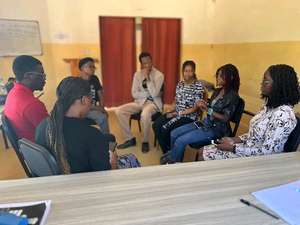
In Kenya, community programs are quietly reshaping this narrative. Rehab centers like St. John’s Community Rehabilitation in Embakasi, and peer groups in Kilifi, are teaching young people like Joseph and Asha that addiction isn’t a moral failing, that recovery is not shameful, that each day survived, each craving resisted, is a small victory. But the work is far from over. Stigma still silences most voices; fear keeps the majority hiding.
Addiction is a friend only if you forget the meaning of friendship. And yet, even in its shadow, there is a path out. Small, stubborn, daily, imperfect. A path paved by accountability, empathy, and the courage to choose yourself—even when the force inside whispers “don’t leave me.”
And for anyone walking this path, the hardest truth remains: freedom is not a place. It’s a practice. It’s waking up, again and again, and choosing life.