Vertical Farming: Growing more with less water and less waste
We deliver practical, online training adapted to each group or business. Greener energy. Financial literacy. Climate resilience. No generic modules. After training, graduates may access green loans at 8–11% through our partner lenders.
Ugunja area, Siaya County
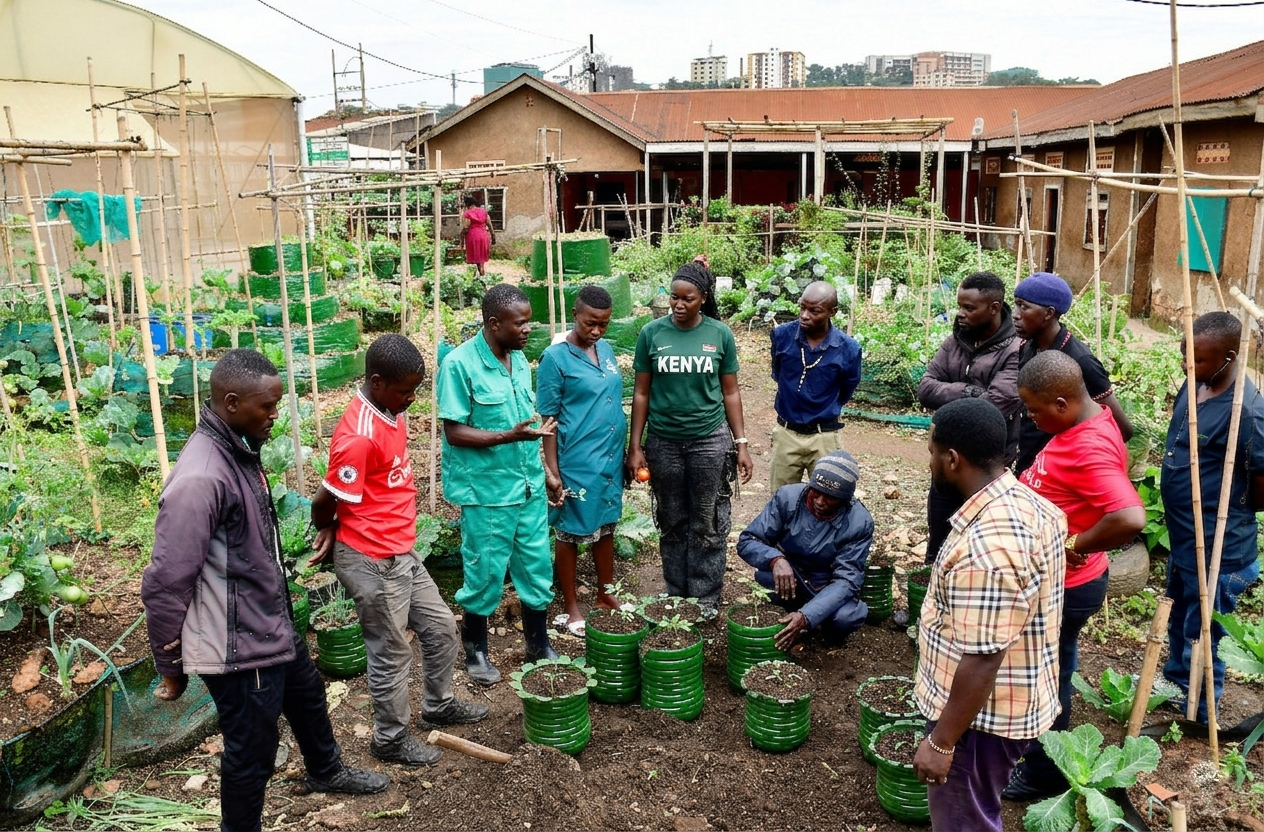
In Ugunja, fourteen young farmers are cultivating traditional vegetables like kales, spinach, amaranth, and nightshade. But instead of sprawling across vast fields, they’re using vertical grow bags. Just one square meter can hold over a hundred plants in these bags.
The inspiration struck from a YouTube video, but putting the idea into practice was a different story. Their initial bags were crafted from old sacks that ended up tearing. They eventually switched to UV-stabilized bags, which proved to be much more effective.
Next came the challenge of watering. They had to haul water from a stream, spending two hours a day on this task. On some days, they could only manage to water half of the bags.
They decided to join our training sessions, which covered topics like vertical spacing and drying preservation. They discovered that plants on the north side of a grow bag grow slower than those on the south side due to the sun's direction. They also learned to rotate the bags every two weeks and how to use solar bubble dryers, adjusting temperature, humidity, and airflow for different vegetables. For instance, amaranth dries quicker than kales, while nightshade requires lower heat to maintain its flavor.
After completing the training, they applied for a loan of KES 150,000 at an interest rate of 9.5 percent. With this, they purchased a solar pump, a water tank, drip irrigation lines, and solar bubble dryers. However, the pump arrived with a missing connector, leading to a frustrating two-week wait for the replacement part.
Now, on sunny days, they can water their plants in just thirty minutes. Even when it’s cloudy, the pump still provides enough water, albeit at a slower rate. Vegetables that once went to waste are now dried and sold during the dry season for a better price. They’re optimistic about their growth, but they’ve only been tracking their progress for six months. The real test will come when they have a full year of data to analyze.
Loan: Group Enterprise Loan – KES 100,000 at 9.5% over 9 months
Green tech: Solar pump + solar bubble dryers + grow bags
Circular economy: Composting of vegetable scraps + spent bag recycling + hotel food scrap collection