Hair Waste Segregation: Turning salon trash into farm treasure
We deliver practical, online training adapted to each group or business. Greener energy. Financial literacy. Climate resilience. No generic modules. After training, graduates may access green loans at 8–11% through our partner lenders.
Kaptembwo, Nakuru County
Ask Florence what keeps her up at night, and she won’t mention rent or customers. Instead, she’ll talk about waste. Every single day, she sweeps up clippings of human hair and synthetic extensions, tossing them into the bin without a second thought. It wasn’t until the rainy season that she realized where they ended up; clogged drainage channels in her neighborhood. Human hair takes years to break down, while synthetic hair? It never does.
That’s when she decided to join our training program. The sessions were all about waste segregation and forming composting partnerships. She discovered that human hair is rich in nitrogen but breaks down slowly, so it needs to be mixed with green waste, like vegetable peels, to compost effectively. She also learned that synthetic hair has to be kept completely separate since it doesn’t decompose and can ruin the compost. Plus, she figured out how to approach composting groups with a steady supply of clean materials instead of random bags of mixed trash.
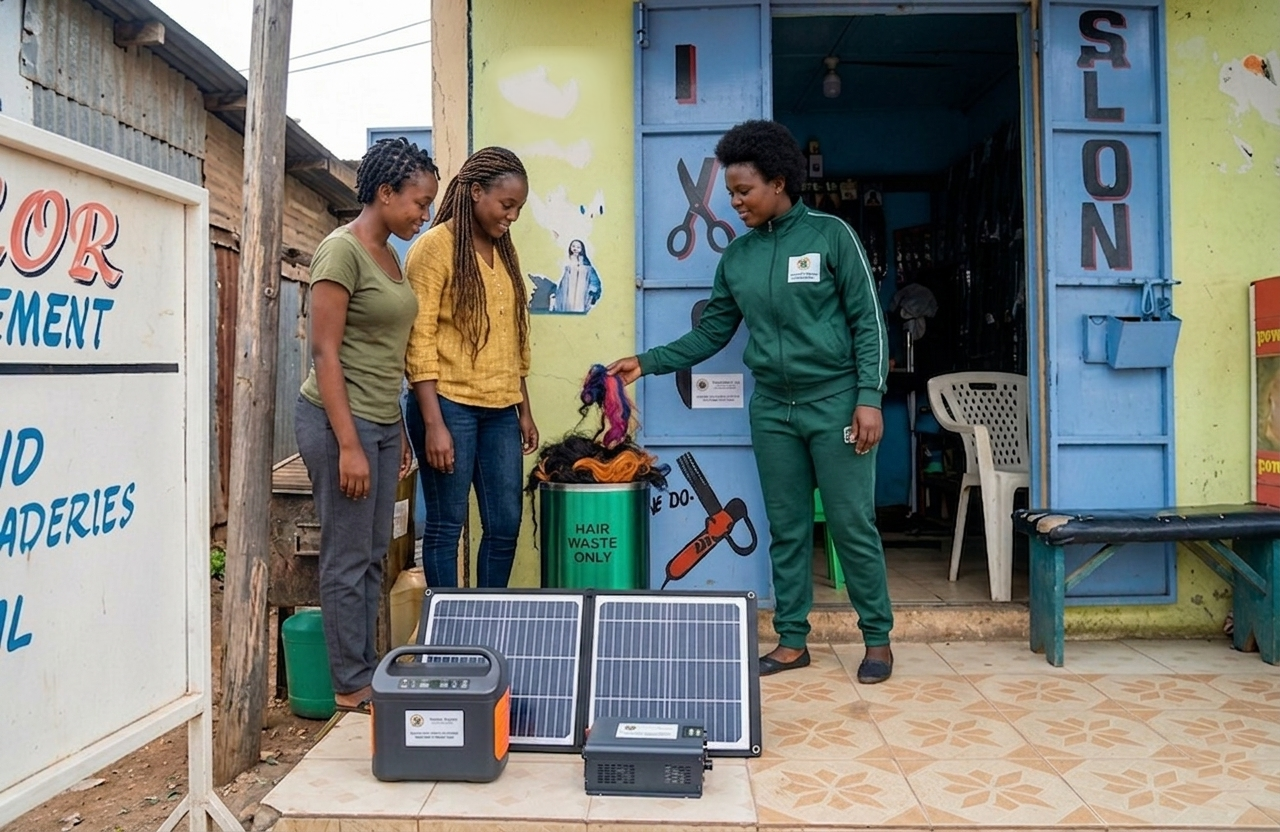
After completing the training, she applied for a Green Starter Loan. With that, she bought a segregated bin system for her salon and invested in a solar power and inverter system. The solar setup keeps her clippers and dryers running smoothly during blackouts, while the bins ensure that human hair stays separate from synthetic waste.
The first month was a bit of a whirlwind. She kept discovering synthetic hair mixed in with the human hair. She trained her staff three times, but two of them still forget.
Now, she supplies clean hair waste to a local composting group, which transforms it into organic fertilizer for urban farms. The plastic waste? That goes to a recycler that turns it into building materials. Thanks to her solar system, she can manage critical loads during outages, and her electricity bill has dropped by about forty percent.
Two other salon owners in Kaptembwo have reached out to her for advice on how to get started. She’s happily teaching them the ropes.
Loan: Green Starter Loan – KES 100,000 at 8% over 6 months
Green tech: Solar power + inverter system + modern segregated waste bins
Circular economy: Hair waste composting through local group + salon collection network