Waste to Weave: Turning salon plastic into household products
We deliver practical, online training adapted to each group or business. Greener energy. Financial literacy. Climate resilience. No generic modules. After training, graduates may access green loans at 8–11% through our partner lenders.
Likoni, Mombasa County
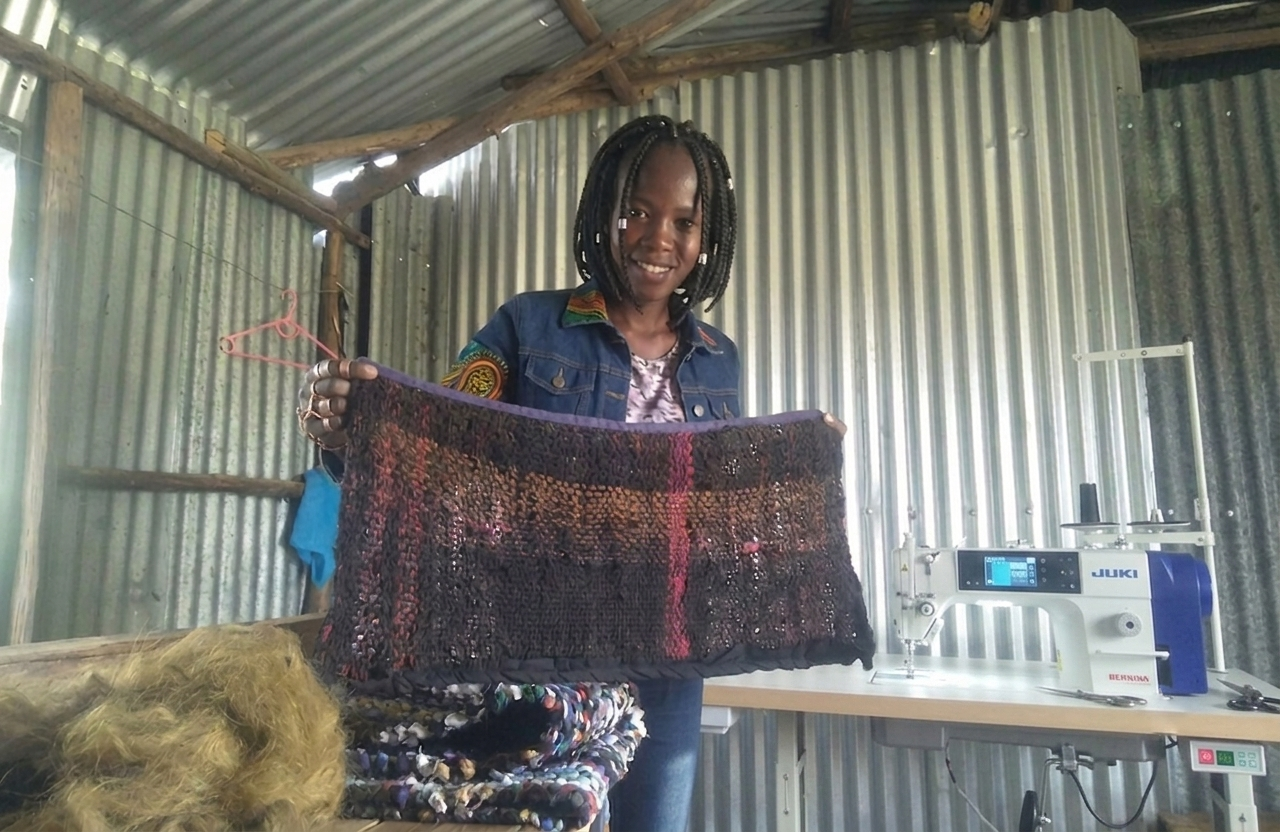
Aisha Mwaramu runs a cozy little workshop in Likoni, where she’s found a unique way to give discarded synthetic hair extensions a second life. Instead of letting this plastic waste pile up in landfills or go up in smoke, she collects it from local salons, washes it, sorts it, and weaves it into beautiful door mats.
She didn’t kick things off with a loan; she started with just a needle and thread. The first mat she made took her three days to complete, but it fell apart. The second one lasted a month, which was an improvement! After saving up for weeks, she finally bought a secondhand manual sewing machine. It got the job done, but it was slow, and her foot ached from all that pedaling. Each mat took her half a day just to stitch together.
Then she joined our training program, where she learned that synthetic hair comes in three types of plastic: acrylic, polyester, and kanekalon. She discovered that acrylic frays easily, polyester holds up well, and kanekalon is heat sensitive, requiring special handling. This knowledge helped her separate the materials before processing them. She also learned to price her mats by the square meter instead of by the mat, ensuring her prices remained consistent, no matter the size.
After completing her training, she applied for a Green Starter Loan of KES 95,000 at an 8 percent interest rate. She used part of the funds to buy storage bins for the salons and washing equipment. The biggest game-changer, though, was upgrading from her manual machine to a modern electric sewing machine. This new machine runs on grid power, but she’s planning to add a small solar panel later. With this upgrade, her stitching time plummeted from half an hour per mat to just 10 minutes!
She set aside KES 25,000 for thread, workshop rent, and transport to shops.
Now, she processes hair from over fifteen salons. Salons that provide clean waste even get a discount on collection. Her mats are sold to local shops and eco-conscious customers, and thanks to the electric machine, her output has doubled. No more limping home with a sore foot at the end of the day!
Loan: Green Starter Loan – KES 95,000 at 8% over 8 months
Green tech: Specialized storage bins + hygienic washing equipment + weaving looms + sewing machine upgrades
Circular economy: Salon collection network + synthetic hair upcycling + zero waste loop