Solar Pump: Cutting diesel use by eighty percent on a semi arid farm
We deliver practical, online training adapted to each group or business. Greener energy. Financial literacy. Climate resilience. No generic modules. After training, graduates may access green loans at 8–11% through our partner lenders.
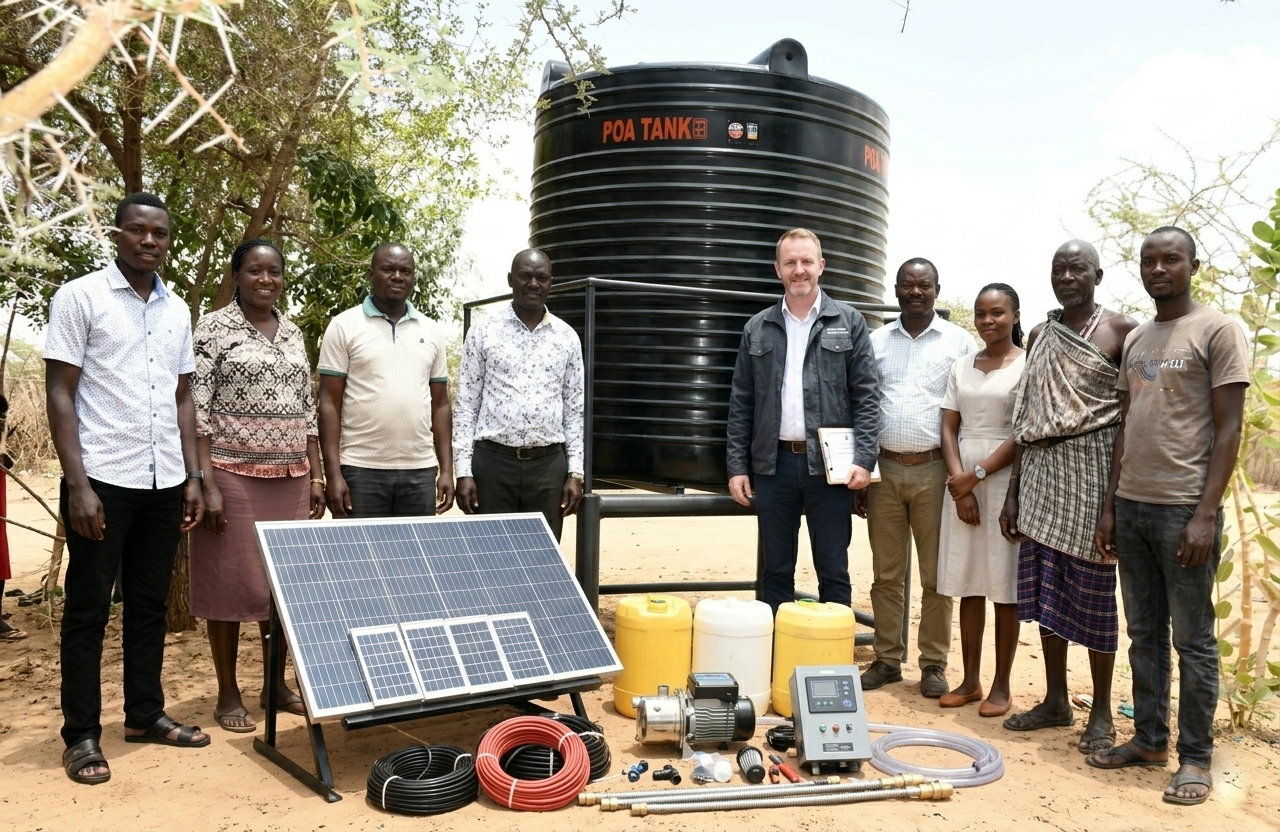
Ololulunga, Narok County
Ololulunga is a semi-arid region where water is hard to come by. For years, a small group of farmers relied on a diesel-powered generator to draw water from a shallow well. The cost of fuel was staggering, and every liter posed a risk of leaking into their soil.
They decided to join our training sessions, which focused on pump sizing and rainwater harvesting techniques. They discovered that a solar pump needs to be matched to the depth of their well rather than the size of their farm. If the pump is too small, it runs all day and wears out quickly; if it’s too big, it’s just too expensive. They learned how to calculate the right wattage for their needs. They also picked up tips on installing gutters on their storage shed to direct rainwater into a second tank, providing them with a backup water supply at no extra cost.
After completing the training, they applied for a loan of KES 150,000 at an interest rate of 9.5 percent. A philantrophist contributed an additional KES 20,000 as a non-repayable grant. With this funding, the group purchased a solar pump, a controller unit, and two storage tanks.
The pump arrived right on schedule, but the controller unit was delayed. They ended up waiting two weeks, relying on the diesel pump and burning through fuel they simply couldn’t afford.
Now, the solar pump operates quietly and meets most of their water needs. During the cloudiest months, they still use the diesel pump occasionally, but their diesel consumption has plummeted by over eighty percent. The two storage tanks provide a safety net that they didn’t have before, with the donor-funded tank collecting rainwater during the rainy season.
With a reliable water source, they started planting cover crops to enrich the soil with nitrogen. They also collected crop residues from two neighboring farms to create compost. They estimate that they’ll pay off the loan within a year, thanks to the savings on fuel alone.
Loan: Group Enterprise Loan – KES 150,000 at 9.5% over 10 months
Green tech: Solar water pump + controller unit + UV stabilized storage tanks
Circular economy: Crop residue and manure composting + indigenous tree nursery + erosion gully restoration