Greenhouse Farming: Reducing crop loss and increasing market days
We deliver practical, online training adapted to each group or business. Greener energy. Financial literacy. Climate resilience. No generic modules. After training, graduates may access green loans at 8–11% through our partner lenders.
Malava, Kakamega County
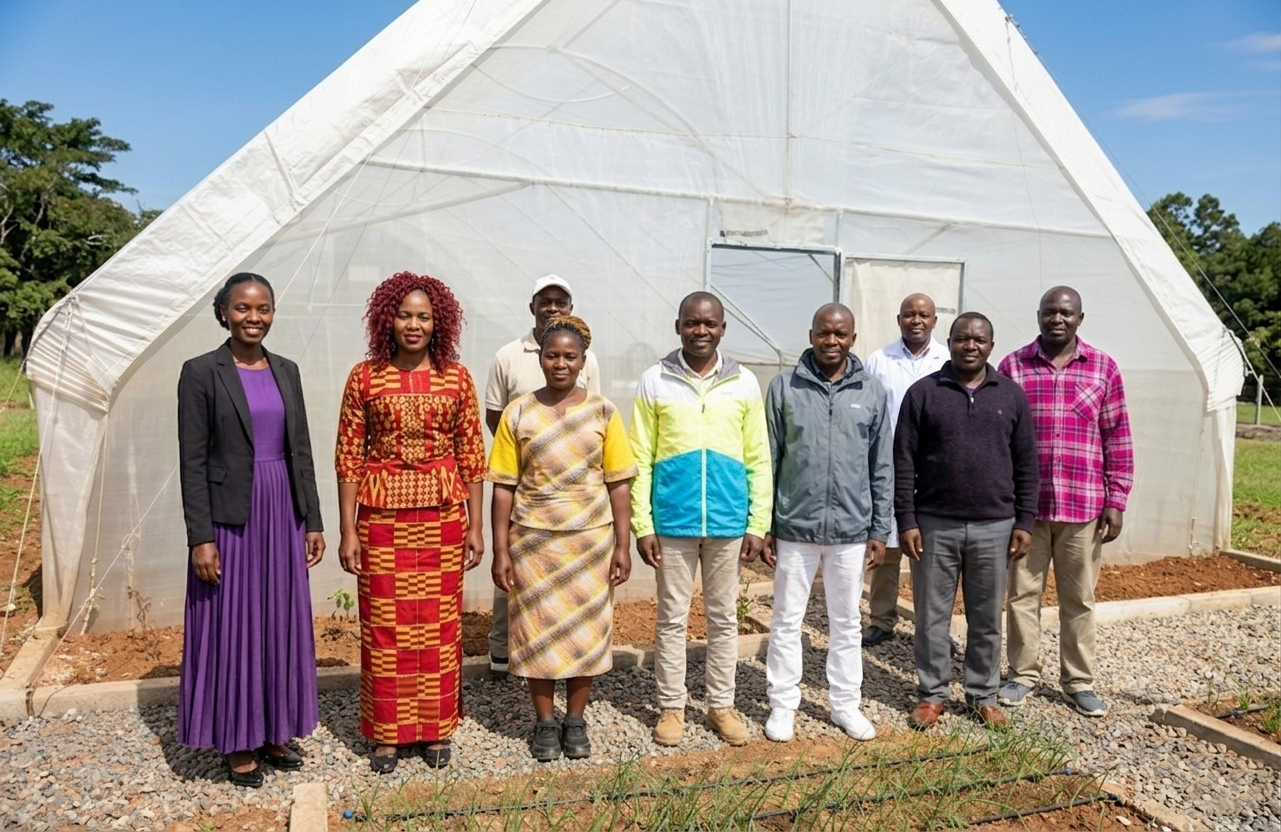
In Malava, fifteen farmers cultivate maize, beans, kales, and tomatoes on their small plots. Most weeks, they were just managing to feed their families, and selling at the Malava Market felt more like a bonus than a sure thing. The issue was not their hard work; it was all about timing. They were at the mercy of the rains, unable to water their crops when they needed it most.
They decided to enroll for our Green Enterprise Training (GET). The sessions focused on two key areas: how to size a solar pump for their water tank and how to calculate effective irrigation schedules. They discovered that running a pump for just one hour at dawn minimises water loss due to evaporation, compared to running it for two hours at midday. They also learned to test soil moisture by touch rather than guesswork. Just straightforward water physics and plant biology.
After completing the training, they applied for a loan which they used to purchase a greenhouse and a drip irrigation system connected to their existing 5,000 litre water tank. The greenhouse arrived in just two weeks, but the drip lines took an extra ten days because the first batch of pipes did not fit.
Now they are reaping double the harvest compared to before. The greenhouse shields their tomatoes from the heavy rains that used to split the fruit. The drip system delivers water directly to the roots instead of the leaves, which has reduced fungal diseases by over half. They are still monitoring their first full year with the new setup, but their trips to the market have increased from once a week to twice.
What they do with waste completes the cycle. Crop residues from kales and tomatoes are chopped and mixed with animal manure to make organic compost. That compost feeds the greenhouse soil, reducing the need for expensive synthetic fertilisers. They also collect vegetable waste from neighbouring households in Malava town, turning someone else's rubbish into their fertiliser.
Loan: Group Enterprise Loan – KES 180,000 at 9.5% over 12 months
Green tech: Greenhouse + drip irrigation
Circular economy: Crop residue composting + household vegetable waste collection