
From petrol to battery: A boda rider's transition to electric
We deliver practical, online training adapted to each group or business. Greener energy. Financial literacy. Climate resilience. No generic modules. After training, graduates may access green loans at 8–11% through our partner lenders.
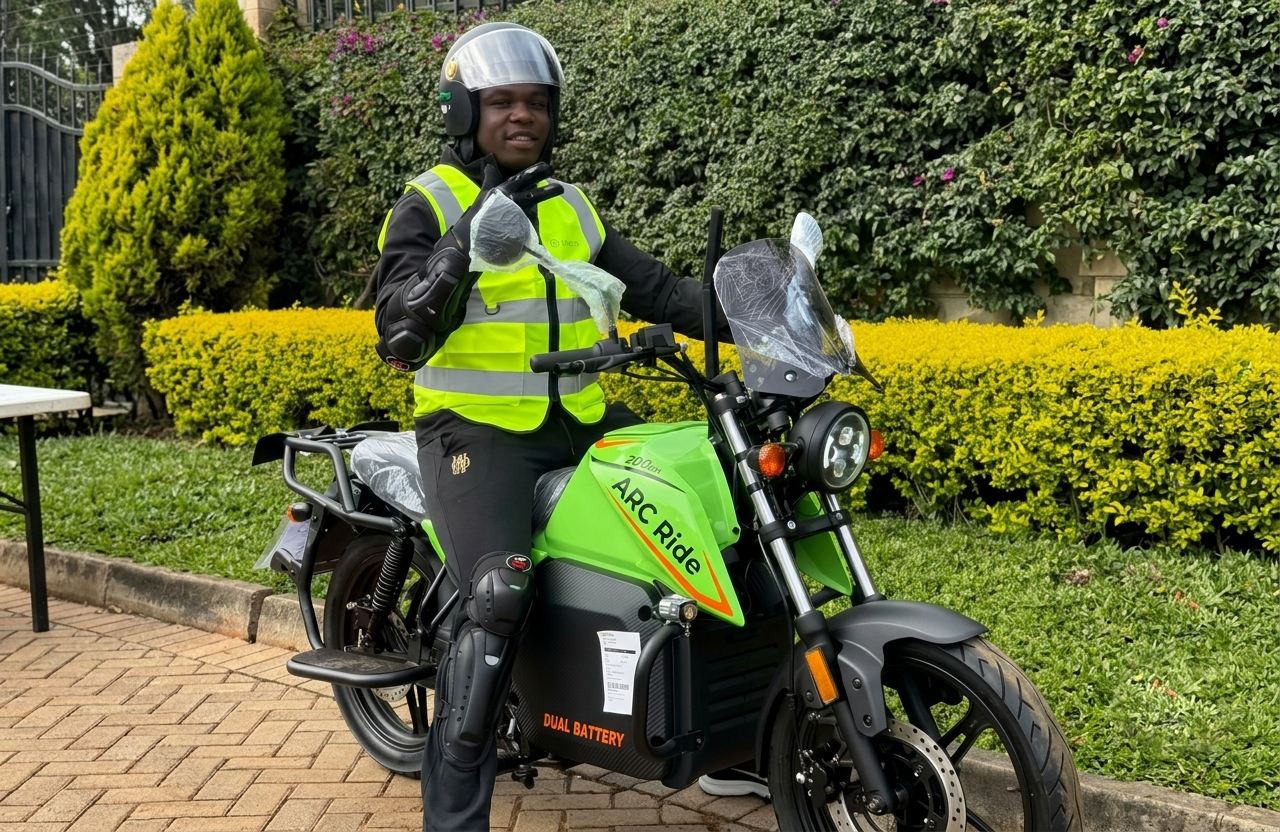
Nairobi, Kenya
Musilia had been riding a boda boda in Nairobi for four years. He knew every shortcut in Eastlands, every traffic jam hotspot, every customer who paid on time and every one who did not. But what he could not predict was the price of petrol. Some weeks it went up twice. His earnings stayed the same. His profit shrank.
He heard about our Green Enterprise Training through a Sacco meeting in Umoja. A few riders had already completed it. They told him about electric bikes, battery swapping, and a loan that did not demand collateral he did not have. Musilia was sceptical but curious. He signed up.
The training was not what he expected. No theoretical lectures. Just practical sessions tailored to boda riders. He learned to calculate the real cost of petrol per kilometre versus the cost of a battery subscription. He learned to track his daily earnings and separate them from his operating costs. He also learned how to maintain an electric motor, which has fewer moving parts and requires less frequent servicing than a petrol engine.
After completing the training, Musilia applied for the e-mobility financing package. He received an electric motorcycle from ARC Ride and a cash loan of KES 10,000 to cover his first month of battery subscriptions, insurance, and the adjustment period while he learned the new routes to swap stations.
The transition was not seamless. The first week, he forgot to check his battery level before heading to the outskirts of the city. He had to push the bike nearly a kilometre to the nearest swap station. He learned quickly. Now he plans his routes around ARC Ride's 600 swap cabinets, never letting the battery drop below twenty percent.
His daily fuel costs have disappeared. Where he used to spend KES 400 on petrol, he now spends about KES 200 on battery subscriptions. His maintenance costs have dropped because electric motors have fewer parts to break. He no longer loses earnings to breakdowns caused by ageing petrol engines.
"Petrol was eating my money before I even made it," Musilia says. "Now I know exactly what I spend. The bike pays for itself."
He has also started referring other riders from his Sacco. Four of them have already enrolled in the training. Musilia now earns enough to save a little each week. He is planning to add a second electric bike and hire a rider to operate it.
Loan: E-mobility financing – Electric motorcycle + KES 10,000 operating cash
Partner: ARC Ride (Battery-as-a-Service model)
Green tech: Electric motorcycle + battery subscription